Katerini Tunnel T4
Automation in the Service of Safety
Behind the apparent simplicity of modern beverages lies a complex set of processes, where precision, hygienic design and flexibility — combined with safety and production data utilisation — determine not only product quality, but the long-term viability of the operation.
AS Hellas has delivered automation and process engineering projects at soft drink and bottled water production facilities — including Epirotic Bottling Company (VIKOS Natural Mineral Water) — and this hands-on experience has convinced us: “simple” beverages are anything but simple to produce.
On the shelf, products like flavoured water or energy drinks give the impression of a straightforward composition: water, flavourings, perhaps sugar or functional ingredients. In reality, that simplicity is deceptive.
Unlike “heavier” products, there is no room to conceal deviations here. A minor dosing error, a mixing inconsistency, or a suboptimal tank geometry can directly affect the final result — both organoleptically and microbiologically.
A product with few ingredients leaves no room to hide any deviation.
Although filling is often considered the most “sensitive” stage, in practice critical deviations begin earlier. Syrup preparation, dosing accuracy and mixing homogeneity are the real determining factors.
Dosing precision is not only about ingredient percentages, but also about the dynamics of how they are introduced into the system. The order of addition, local concentration and mixing conditions directly affect solubility and final homogeneity.
The design of tanks and transfer lines also matters considerably. Areas with insufficient flow or “dead zones” can lead to non-homogeneity or microbiological risks — a problem we have encountered and resolved in real production environments.
Hygienic design is a fundamental requirement — but it is not sufficient on its own. In practice, the effectiveness of Cleaning-In-Place (CIP) procedures depends as much on operating parameters as on the system design itself.
Factors such as achieving turbulent flow (Reynolds > 4000), avoiding dead legs, and ensuring complete line drainage are critical. Even minor deviations in these areas can create conditions for biofilm growth, affecting both product quality and shelf life.
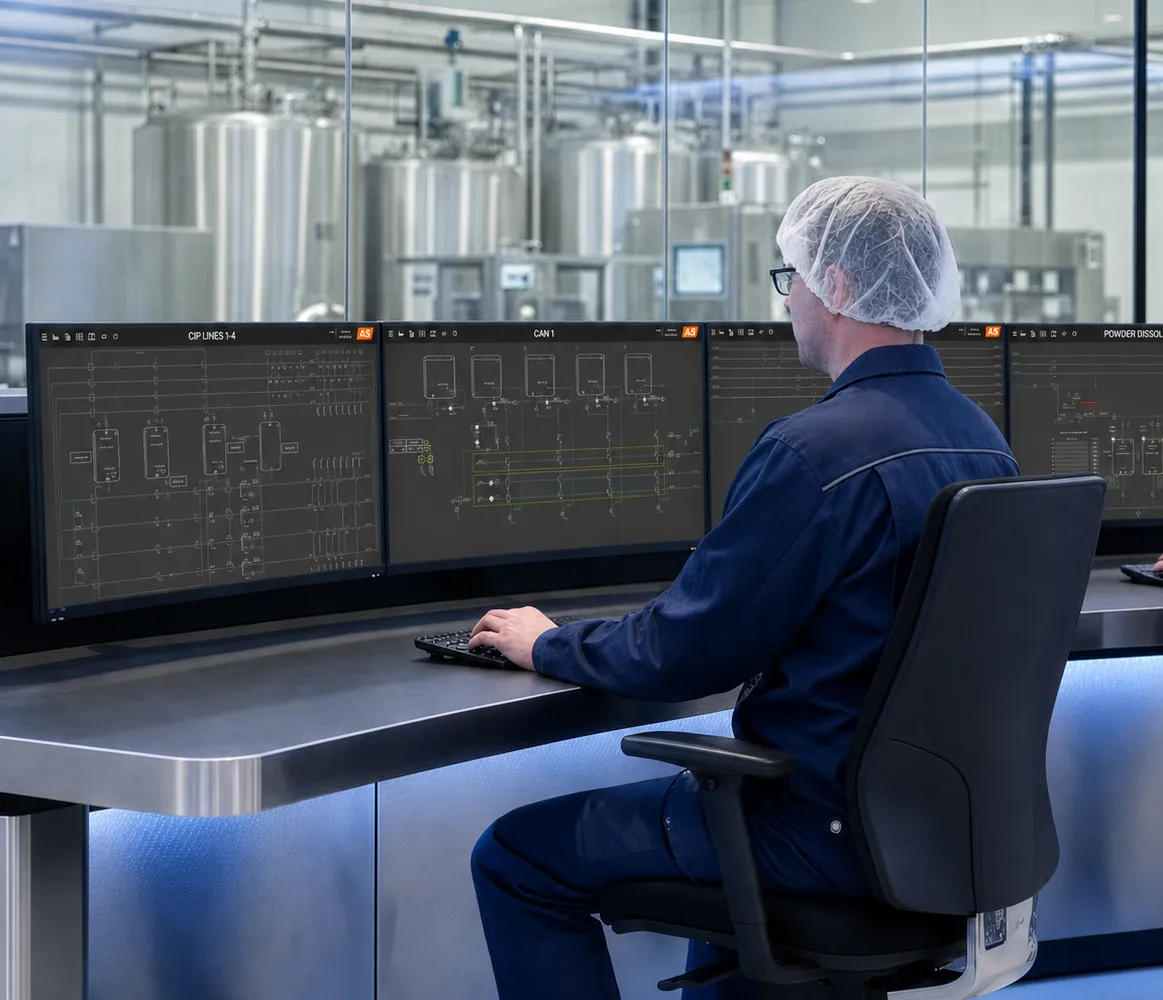
On the VIKOS project (Epirotic Bottling Company), AS Hellas installed automated CIP systems fully integrated into the existing automation environment, featuring conductivity, temperature and pressure sensors, filters enabling dead-zone drainage, and automated washing of all circuits — with full real-time traceability.
Producing a successful product is not the end of the process — it is the beginning. The real challenge is maintaining that same quality consistently, influenced by temperature, time, mixing intensity, and even minor raw material variations.
Repeatability depends on controlling Critical Process Parameters (CPPs) — mixing temperature, residence time, shear rate — which directly affect Critical Quality Attributes (CQAs). In energy drinks, where functional ingredients such as caffeine and vitamins coexist, the margin for deviation narrows even further.
Repeatability is not accidental. It is the result of deliberate design.
In this environment, recipes cease to be a static list of ingredients. They become a dynamic production control tool, with versioning, traceability and access control capabilities — not a data repository, but a fully integrated process control instrument.
The growing interconnection of industrial systems also brings OT (Operational Technology) security to the foreground. Recipes, as a critical production asset, are now also a potential point of vulnerability. The challenge is twofold: maximum flexibility in recipe management, while maintaining a secure and controlled operating environment.
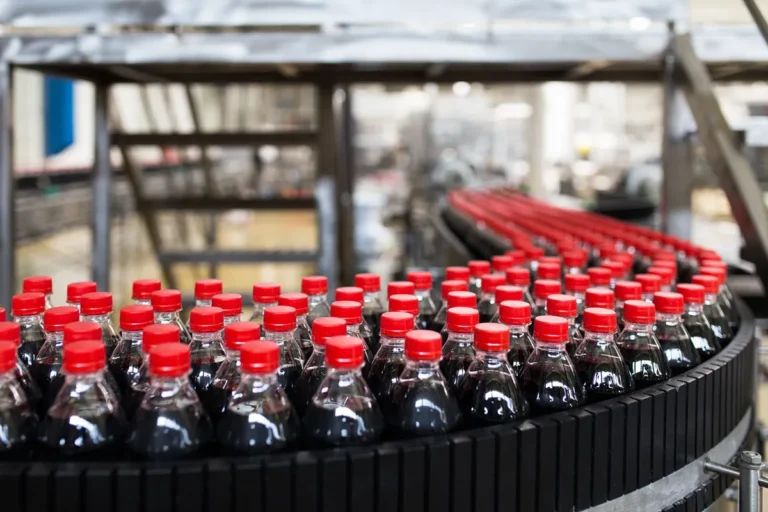
Our experience in beverage and bottled water projects has consistently shown that success depends on the overall engineering approach — not just the equipment selected.
For Epirotic Bottling Company / VIKOS, AS Hellas took full responsibility for the design, supply, installation and commissioning of integrated systems: water spring integration with pressure, level, conductivity and turbidity sensors; connection of new filling machines with custom automation; construction of new storage tanks with full sensor monitoring and CIP capability; and software development integrated into existing SCADA/PLC platforms — supporting remote monitoring and future scalability.
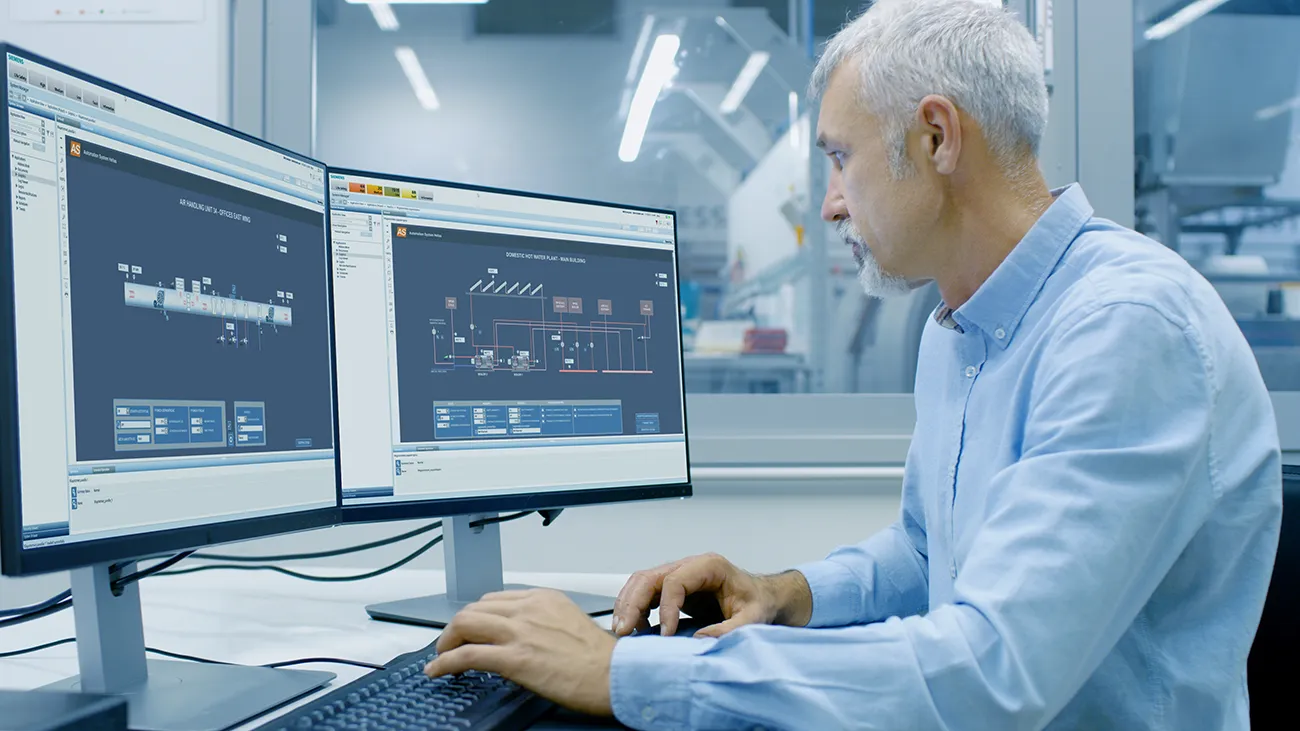
Solutions such as AS Analytics consolidate data from PLC/SCADA level through to higher-level information systems, converting raw data into structured, actionable information for both operators and management.
Despite their simplicity as consumer products, flavoured water and energy drinks represent one of the most demanding applications in the modern food and beverage industry. Success depends on the ability to execute with consistency, safety and flexibility — under real production conditions.
That is precisely what AS Hellas does: we translate industrial engineering expertise into tangible value — from design through to operation.
Want to discuss your production challenges? Get in touch: sales@ashellas.com
Why is flavoured water production technically demanding?
Flavoured water and energy drinks contain very few ingredients, so any deviation — in dosing, mixing or cleaning — is immediately apparent in the final product. There is no margin to conceal inconsistencies.
What is hygienic design and why does it matter in beverage production?
Hygienic design refers to the engineering of equipment and facilities to allow effective CIP without residues or dead zones. Failure results in biofilm formation, microbiological contamination, and reduced shelf life.
What are Critical Process Parameters (CPPs) in beverage manufacturing?
CPPs are process variables — such as mixing temperature, residence time, and shear rate — that directly affect the quality attributes (CQAs) of the final product. Controlling them is a prerequisite for consistent, repeatable production.
How does recipe management relate to production quality?
A recipe management system does more than store formulations — it controls their precise execution, maintains a change history (versioning), enforces access control, and provides full traceability. This translates into consistent quality and faster new product development.
What role does OT security play in beverage production?
OT security protects automation systems from unauthorised access or tampering. In a modern, digitally connected plant, a security breach can directly affect product quality and operational continuity.
What does AS Hellas offer to beverage production facilities?
End-to-end automation and process engineering: CIP system design, recipe management, SCADA/PLC integration, and data analytics (AS Analytics). We have delivered projects for bottled water and soft drink facilities, including some of the leading companies in the sector.